.png)
.png)
.png)
.png)
-
Language

To build your own Itinerary, click  to add an item to your Itinerary basket.
Already saved an Itinerary?

To build your own Itinerary, click to add an item to your Itinerary basket.
Already saved an Itinerary?




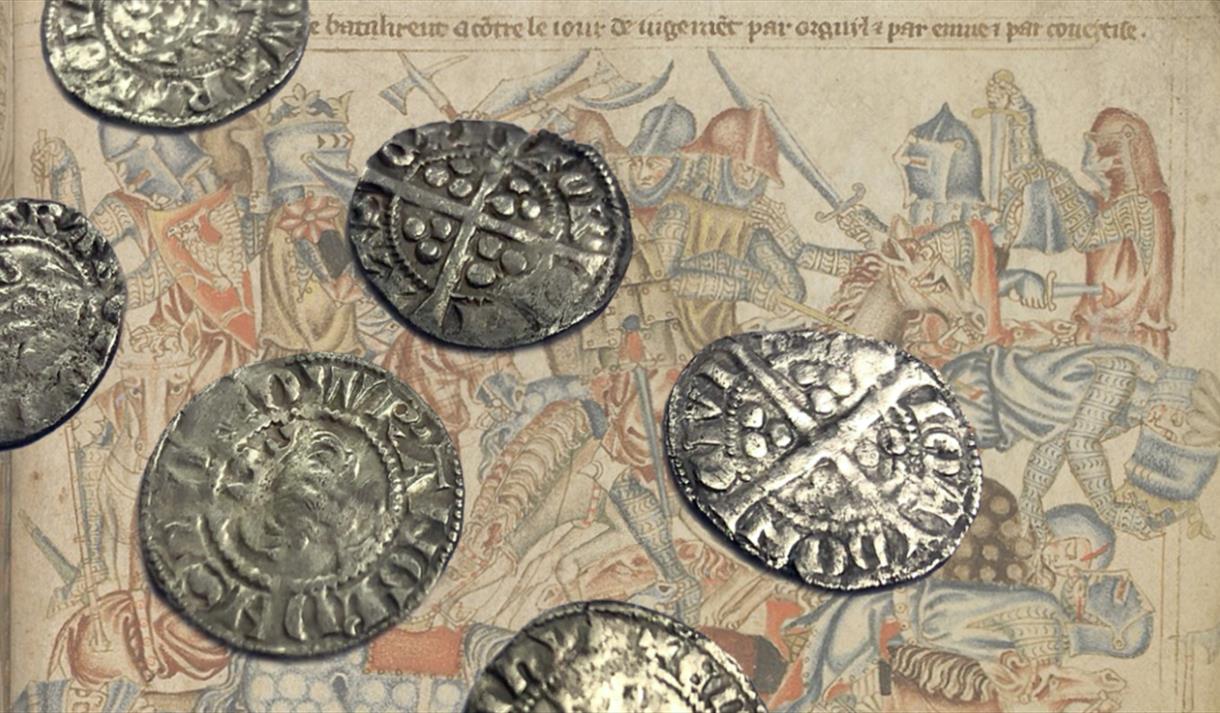
Join medieval historian Dr Christopher Tinmouth for a captivating exploration of the Great Raid and its impact on the Ribble Valley. During the period 1286-1327, Robert the Bruce, King of Scotland, raided the North of England to bring Edward II of England into battle, to force him to recognise him as King of Scotland in his own right, owing no allegiance to the King of England. From 1318-1322, Lancashire felt the fires of war, as Scottish armies pillaged and burned everything they could. The Great Raid of 1322, led by Robert the Bruce himself, penetrated the Ribble Valley, and torched the lands of Sawley Abbey. In this time of near constant invasion and economic hardship, with no support from the King of England, Lancashire communities fended for themselves as best they could.
This lecture will investigate the Pendleton and Sawley Hoards, discovered by the Ribble Valley Metal Detecting Club in 2017, and what they can tell us about this turbulent period in Lancashire's mediaeval history. The Sawley Hoard is currently on display as part of the Hidden Hoards & Fascinating Finds exhibition at Clitheroe Castle Museum, which closes on Sunday 8 March. Don't miss your chance to combine the talk with a visit to see this remarkable hoard before the exhibition ends!
Booking essential. £6.00 per person including refreshments and a free pass to visit the museum (you will receive your free pass on arrival to be used within 30 days). Doors open 11.10am for an 11.30am start.
Meet Dr Christopher Tinmouth:
Dr Christopher Tinmouth (PhD Medieval History, Lancaster University, 2023) has worked with Lancashire County Museum Service (LCMS) since 2015, primarily as a guide at Lancaster Castle. He has gained wide curatorial experience across the Lancaster museums, including research and installation of the Sawley Hoard at Clitheroe Castle Museum. Notably, he mounted a silver penny of Alexander III of Scotland (c.1286) and authored an LCMS blog on the hoard.
Dr Tinmouth's doctoral research focused on late-medieval monastic documentary culture, particularly the ways in which monastic communities constructed their "institutional memory" through cartularies (registers of property). His primary focus was the Furness Abbey Cartulary (c.1410), a beautifully illuminated manuscript housed in the National Archives and the British Library. He also has experience working with several other monastic cartularies, including the Ripon Cathedral Cartulary (c.1350) during his Brotherton Fellowship at Leeds University.
He has also published a peer-reviewed academic article in Northern History Journal (2024) examining how the Scottish raids into Lancashire in the early 14th century, led by Robert the Bruce, influenced the institutional memories of Furness and Byland Abbeys.
Dr Tinmouth has served on the Board of Directors of the Richard III Society and is a standing member of the Society's Research Committee. He has actively contributed to "The Missing Princes Project," led by Philippa Langley MBE, which investigates the fate of the Princes in the Tower of London—work that has uncovered compelling evidence suggesting a need for historical revision.
Since 2021, Dr Tinmouth has chaired the Friends of Lancaster City Museum (FOLCM). With FOLCM's support, he launched the Owen Lectures in July 2025—a new academic conference exploring the life and legacy of Lancaster-born palaeontologist Sir Richard Owen (1804–1892). His latest publication, The Value of Encouraging Neurodivergent Participation in Community Research Initiatives for the Victoria County History of England (2025), grew from his role as Participatory Research Officer for the Victoria County History (Cumbria). The article explores how autistic participants—and their support groups—can contribute scholarly work by harnessing their special interests.
Finally, he is very proud to have created the UK's first trading card game based on museum objects: "The Bonds of Time Historical Trading Card Game".
Sorry, this event has passed
Booking essential. £6.00 per person including refreshments and a free pass to visit the museum (you will receive your free pass on arrival to be used within 30 days). Doors open 11.10am for an 11.30am start.
This historic landmark, in the heart of Ribble Valley provides a stunning vantage point.…
St. Mary Magdalene’s today is a welcoming parish church with a strong musical tradition…
Award-winning Top Hat Tours can offer groups of visitors tailored tours to meet their…
A professional working stained glass studio offering the very finest in bespoke design &…
Clitheroe Castle Labyrinth is the only labyrinth in Lancashire. This unique labyrinth has…
For contemporary craft in Lancashire, look no further than the stunning Platform Gallery…
The Grand is Clitheroe's newest multi-million pound state-of-the-art multi-media music…
Never been duck pin bowling? It’s exactly like ten pin bowling, except the lanes and…
Opening soon. Bowland Social is a vibrant social playground, bringing together classic…
Based in the heart of Clitheroe, Holmes Mill is a unique celebration of Lancashire food,…
Abandoned as a working quarry in the early 1900's, Cross Hill is a good example of…
The first of its kind to be established in Lancashire, which now includes over 20…
And what better place to start than the centre of the UK? Ribble Valley E-Bikes is based…
LANCASHIRES NUMBER ONE FOR LASER TAG! - Located in Clitheroe, Battlestorm is Lancashire’s…
Through fiery forges, pounding hammers and ringing anvils, get a taste of life as a…
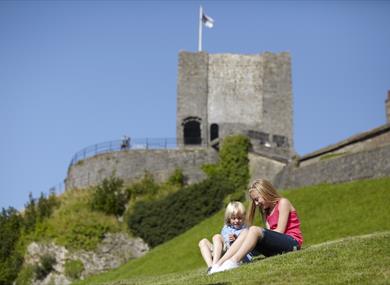 Clitheroe Castle Museum, ClitheroeThis historic landmark, in the heart of Ribble Valley provides a stunning vantage point. Intriguing galleries take you through 350 million years of history and geology of the local area.




© Visit Lancashire 2026. The Official Website of Marketing Lancashire. All Rights Reserved